Welcome - Explore my Blog

I've been keeping this blog for all of my beekeeping years and I am beginning my 19th year of beekeeping in April 2024. Now there are more than 1300 posts on this blog. Please use the search bar below to search the blog for other posts on a subject in which you are interested. You can also click on the "label" at the end of a post and all posts with that label will show up. At the very bottom of this page is a list of all the labels I've used.

Even if you find one post on the subject, I've posted a lot on basic beekeeping skills like installing bees, harvesting honey, inspecting the hive, etc. so be sure to search for more once you've found a topic of interest to you. And watch the useful videos and slide shows on the sidebar. All of them have captions. Please share posts of interest via Facebook, Pinterest, etc.

I began this blog to chronicle my beekeeping experiences. I have read lots of beekeeping books, but nothing takes the place of either hands-on experience with an experienced beekeeper or good pictures of the process. I want people to have a clearer picture of what to expect in their beekeeping so I post pictures and write about my beekeeping saga here.Master Beekeeper Enjoy with me as I learn and grow as a beekeeper.

Need help with an Atlanta area swarm? Visit Found a Swarm? Call a Beekeeper. ‪(404) 482-1848‬

Want to Pin this post?

Friday, August 18, 2006

Filtering the honey


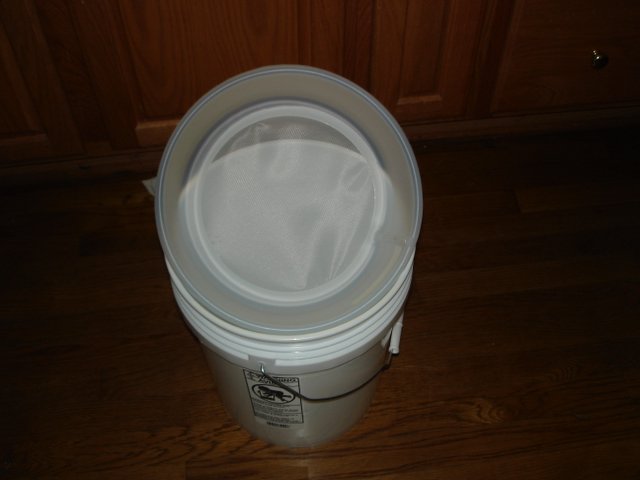
I bought a set of filters from Dadant. The crushed honey comb is currently being strained through the largest filter. The filters are designed to sit in a five gallon plastic bucket.
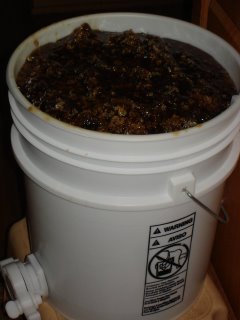
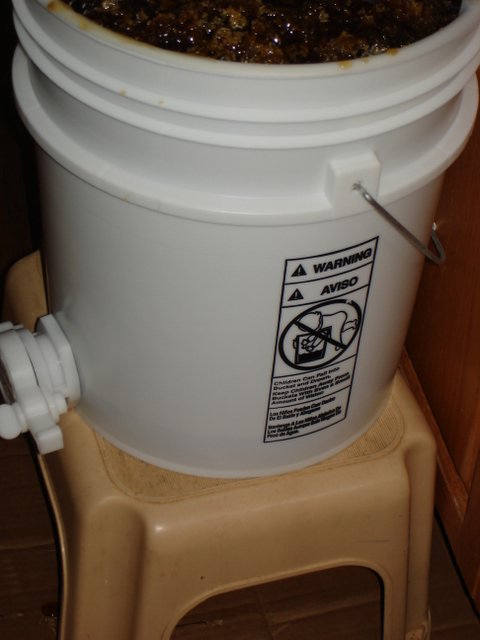
When I had transferred the crushed comb from 10 frames of honey, the filter was filled to the top. In the third picture you can see that the honey had filtered through to be about 1 1/2 inches deep in the 5 gallon bucket.

I left it straining and went to babysit my grandson for about 4 1/2 hours. When I returned the honey filled about half of the 5 gallon bucket with more still working its way through the filter.

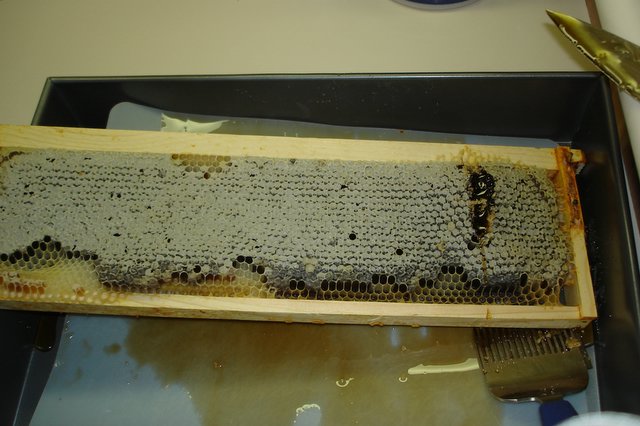
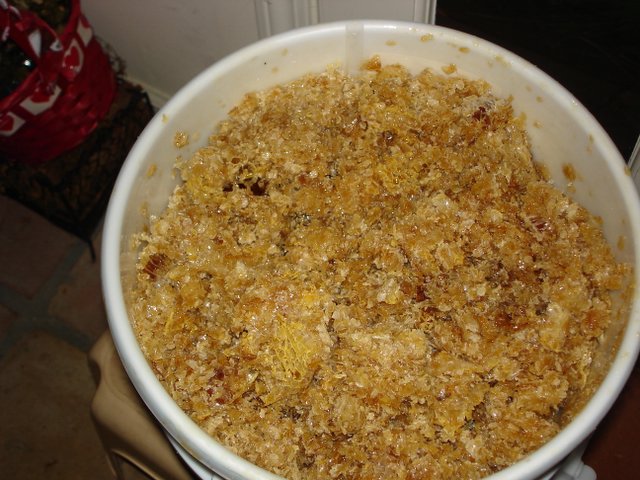
The final picture in this post allows you to compare the comb and liquid honey when I started and the comb without much liquid when I came home.

Tomorrow morning, I hope the straining will be completed. Then I have to decide if I will strain it through a finer strainer??

Also tomorrow I plan to take the more beautiful honey from the 10 frames from the Destin hive and put it in jars as chunk honey, cutting the comb from the frame and putting it in jars.
Posted by Picasa

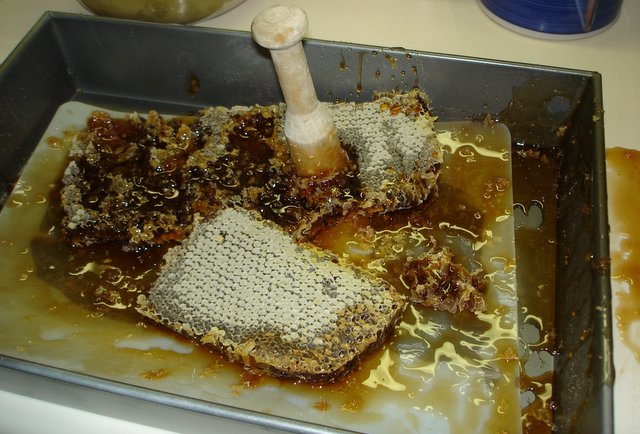
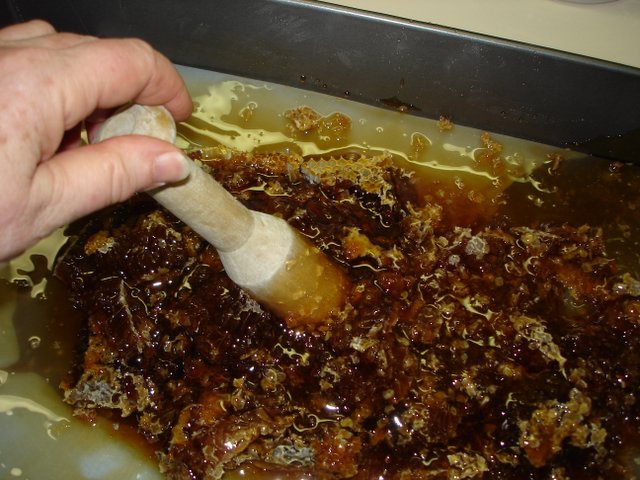
Crushing the honey and honey comb


The empty frame, dripping honey, had to be carried back to the super without getting honey on my floor so I held the frame in a mixing bowl and carried it back to the super.

I used a wooden pestle to crush the honeycomb. It was the most fun I've had since Play-doh.

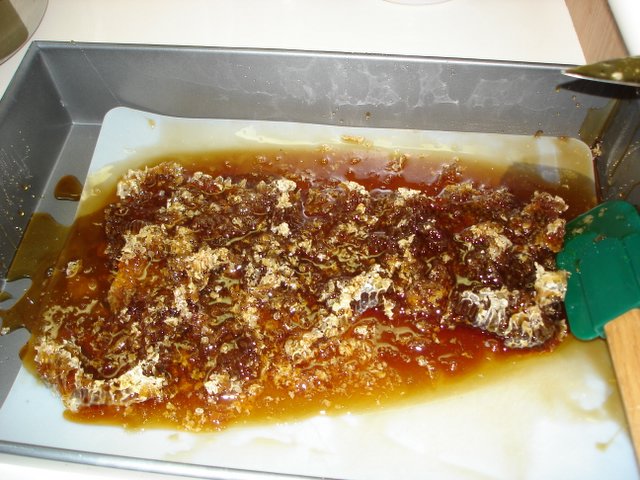
You can see more and more of the gorgeous liquid as the process continued.

The plastic cutting sheet along with a rubber spatula helped me transfer the honey from the roasting pan to the five gallon bucket I had waiting. (see next post!)

Posted by Picasa

Step Two in the Crush and Strain Part of my Harvest


Everyone said, "Don't harvest your honey in the kitchen - it's a completely sticky mess." But I don't have any enclosed outdoor space, so the kitchen is all there is.

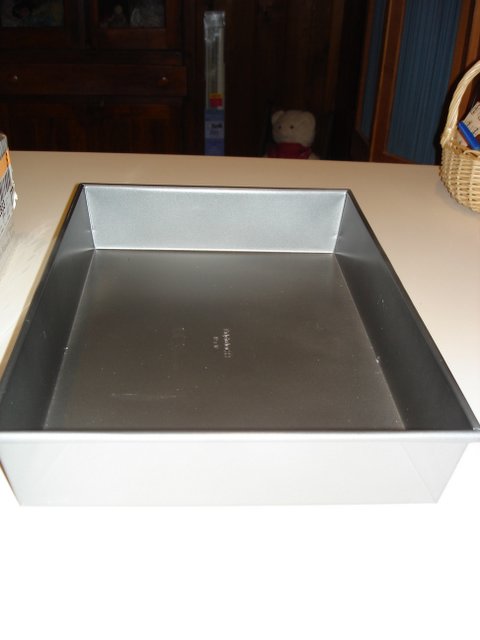
I got prepared - lined the floor with broken down flat cardboard boxes so the mess could be easily carried out. I already had the frame-filled super sitting on the sheet on my counter, so honey dripping from the frames could fall on the sheet. I lined my 17 inch pan with a plastic sheet cutting boards so the pan wouldn't be damaged when I cut.

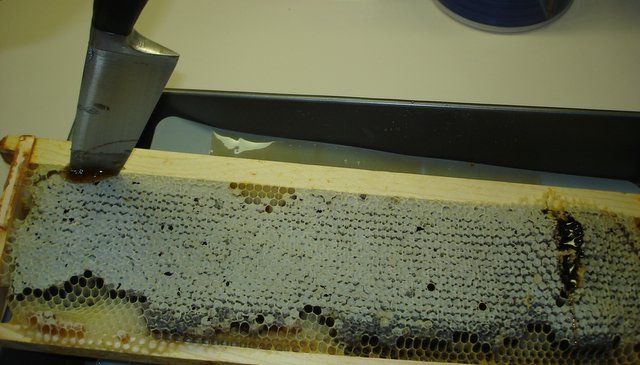
I carried the frame to the roasting pan, held it and cut with the knife around the edge of the capped honey. This frame has some empty comb at the bottom, so I left it on the frame.

The honey falls into the roasting pan where I used my fancy uncapping fork to break open the comb.

It's really dark reddish honey and has a dark taste - wonder if it's tulip poplar honey. I think this super is the oldest one on the hive. When my bees first started making honey, the tulip poplar was in full flower.
Posted by Picasa

The Honey Harvest Begins!


I had an extra deep super so to get the honey filled frames from the hives I decided to use the method I learned at the Folk School . We took one frame of honey at a time, brushed and shook off the bees and placed the frame in an empty super.

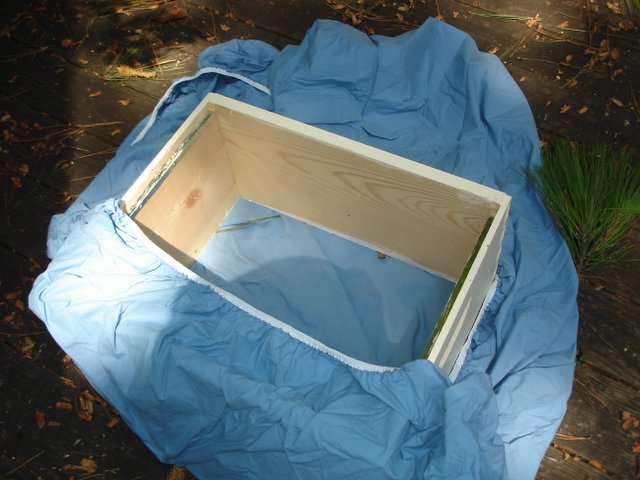
I also wanted to create space that was bee-free so I set the empty super on a single bed sheet, and prepared to gather up the frames.

I opened the Destin hive and selected the super that appeared to have the most frames completely filled with honey and capped. I lifted out a frame, stood at the front of the hive, as recommended in Hive Management by Richard Bonney, and shook the bees off of the frame. The bees who remained I brushed off gently with my bee brush.

[Bad news: I also brushed off a ton of hive beetles and squashed as many as I could. Destin had many more small hive beetles than Bermuda.]


When the frame was free of bees I placed it in the empty super.


I quickly covered the whole project with the other end of the sheet. When 10 frames were in the previously empty super, I grabbed the hand holds through the sheet and carried the whole thing in and set it on my kitchen counter.

I came back out and did the same procedure with the Bermuda hive.

One great advantage of this is that in each hive at the edge of the super there was one frame that wasn't completely ready. I was able to substitute a full frame from the super below that was ready. Posted by Picasa

Thursday, August 17, 2006

Preparing to rob the bees!


This is a very busy month for me - I keep looking at the beehives and wishing I could open them up and get the honey....but I'm teaching at Emory right now in a compressed semester that ends at the end of August and I haven't had a weekend at home to open the hives.

This weekend is the moment. I'm home, I've graded the midterm exams and nothing is standing between me and the honey except perhaps the weather and of course, the bees!

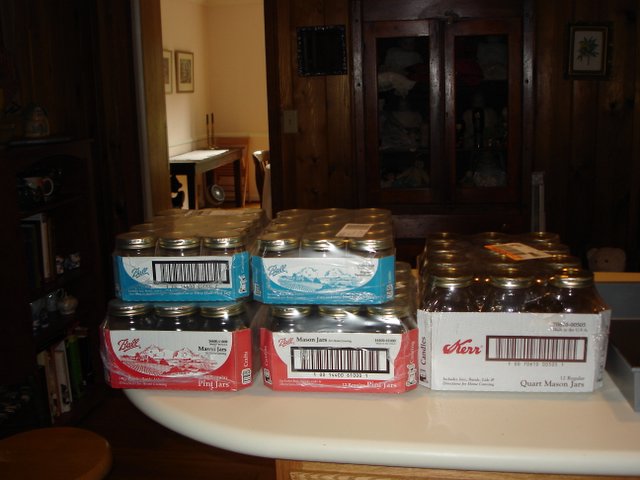
I've bought Mason jars; a 17 inch pan to help me cut chunks of comb from the frames; several large plastic buckets; and a very special uncapping fork for the honey that I plan to strain.

The strainers arrived from Dadant this week and tomorrow and Saturday I plan to try to take the honey. I'll try to post step by step how it goes.

I've found a method used by Michael Bush to crush and strain some of the honey so tonight I plan to drill holes in one of my large plastic buckets.

OK, here's the plan:
1. I'm going to open the hives and find one of the filled and capped supers. I'm taking out to the hives a deep super (the only one I have left empty) and a beach towel.
2. I plan to remove the frames from the super one by one;
3. Shake the bees back into the hive and brush off any remaining bees;
4. Put the capped frame into the empty super and
5. Cover it quickly with the beach towel.


When I've removed the ten frames from the shallow, gotten them all to the empty super, and brushed off all bees, I plan to carry the beach towel covered super into the house and go to work.

Stay tuned and I'll let you know how it goes!

Posted by Picasa

Tuesday, August 08, 2006

The Flight of the Bumblebee


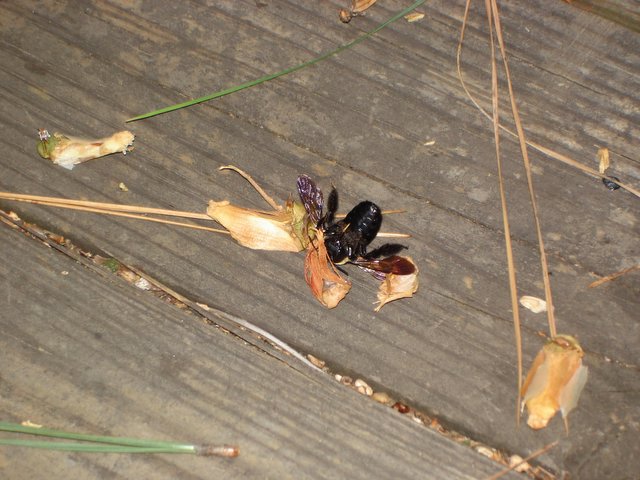
As I ate my breakfast and watched my hives, I saw a bumblebee fly directly toward the entrance. The bees enmass met the bumble bee and slid down the landing pad of the hive to the deck below.

They completely surrounded the bumblebee - you can't even see the bumblebee, but in the second picture, you can see her brown wing at the upper left, sticking out of the pile-on of bees.

The battle went on for a while and at the end, the bumblebee would fly no more. The abandoned body of the bumblebee was dragged away from the hive and left on the deck.

Posted by Picasa

Saturday, August 05, 2006

No sunlight in August


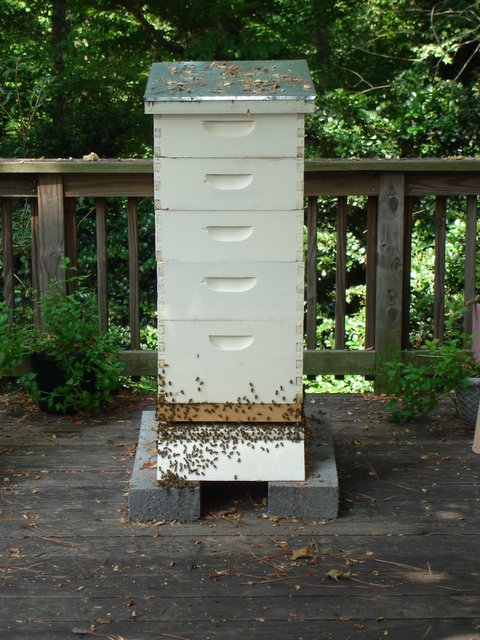
It's 12 noon on August 5 (birthday of two of my daughters) and as I look out on the hives, I noticed that they are not in the sun at all. This is a good thing in Atlanta when it feels like 105 and very humid as it does today.
However, it is my understanding that the bees feel much more inspired in the sunshine to go out and forage and work hard in the hives. This will not be a day of inspiration for them - as you can see by their hanging out on the front porch. Usually in the middle of the day there are only a few bees hanging out - most are inside working or outside foraging.
So is the shade a problem? If I decide that it is, I can trim some branches from the oak tree that is causing the August morning shade.
Posted by Picasa

Bugs and the bees


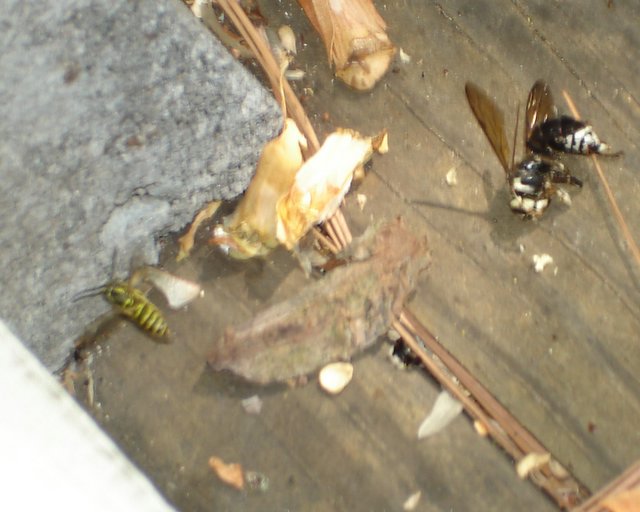
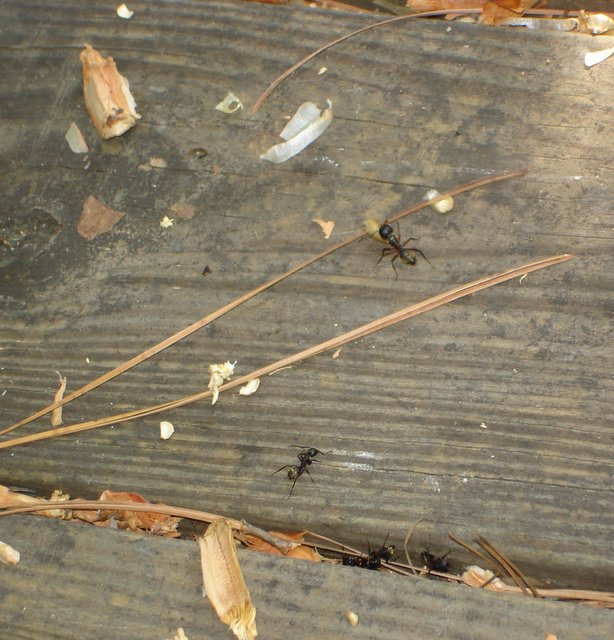
Today I found a dead bald-faced hornet, a piece of another dead bald-faced hornet (look to the upper right of the full body and you'll see a body part), a blurry yellow jacket and several ants all around the bee hives.

Within a few moments while I watched another bald-faced hornet was attempting to enter the hives - amazing that the hornet is not deterred by the death of the others.

The ants don't seem interested in the hive, but rather are focused on pieces of pine tree that have fallen on the deck in the recent rain.

Posted by Picasa

Pin this post

LinkWithin

Related Posts Plugin for WordPress, Blogger...