Welcome - Explore my Blog

I've been keeping this blog for all of my beekeeping years and I am beginning my 19th year of beekeeping in April 2024. Now there are more than 1300 posts on this blog. Please use the search bar below to search the blog for other posts on a subject in which you are interested. You can also click on the "label" at the end of a post and all posts with that label will show up. At the very bottom of this page is a list of all the labels I've used.

Even if you find one post on the subject, I've posted a lot on basic beekeeping skills like installing bees, harvesting honey, inspecting the hive, etc. so be sure to search for more once you've found a topic of interest to you. And watch the useful videos and slide shows on the sidebar. All of them have captions. Please share posts of interest via Facebook, Pinterest, etc.

I began this blog to chronicle my beekeeping experiences. I have read lots of beekeeping books, but nothing takes the place of either hands-on experience with an experienced beekeeper or good pictures of the process. I want people to have a clearer picture of what to expect in their beekeeping so I post pictures and write about my beekeeping saga here.Master Beekeeper Enjoy with me as I learn and grow as a beekeeper.

Need help with an Atlanta area swarm? Visit Found a Swarm? Call a Beekeeper. ‪(404) 482-1848‬

Want to Pin this post?

Showing posts with label corks. Show all posts

Tuesday, February 01, 2022

Corks and the Bees Water Supply

 When I set up the bird bath, I wasn't thinking of the bees. There is water in my neighborhood - a nearby creek and feeder streams all over - so plenty of water available. But the first warm day this winter, I noticed bees in my bird bath, struggling to maintain their footing and a couple of dead bees in the water. I immediately added wine corks. Only a couple. I want the birds to use the water AND I wanted to accommodate the bees.

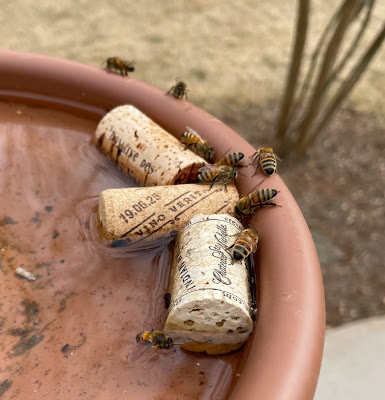
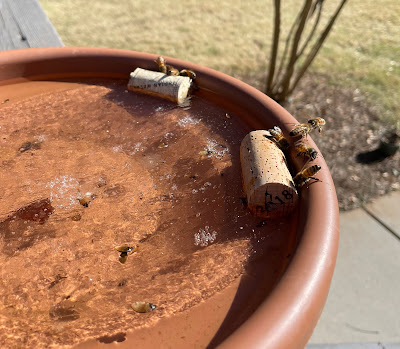
I noticed a very interesting feature of the corks when I was watching the bees in the bird bath yesterday.  You'll see too when you look closely at this photo:
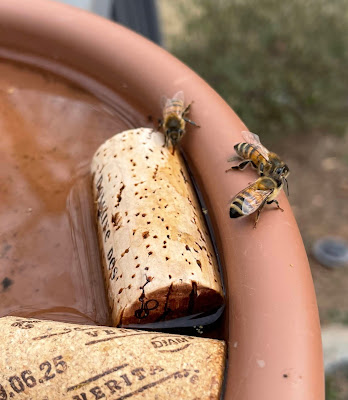

Look at the unfocused bee on the cork. Her proboscis is stuck down in the cork. She is using the porous cork to suck up water absorbed into it, rather than risk drowning by balancing her way down to the surface of the water.
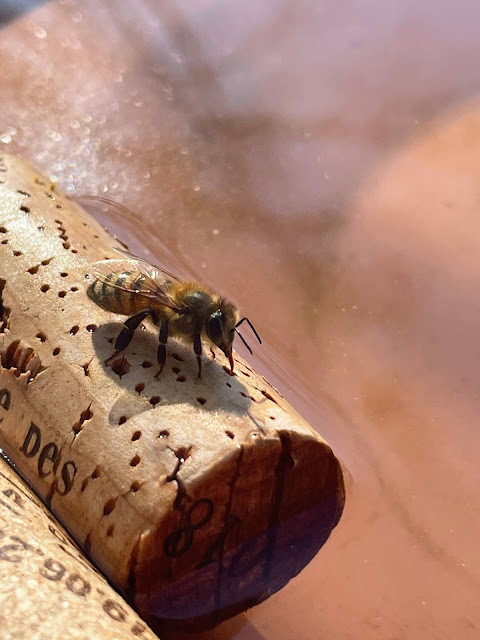
At the MABA short course on Saturday, several people asked how long is the bee's proboscis. I believe from watching them on the corks that her proboscis is a little over 1/8". This is why the plant: bee balm (crimson monarda) is not a flower that our honey bee can use as a nectar source. A hummingbird has a long enough tongue to gather from bee balm, but not the honey bee.


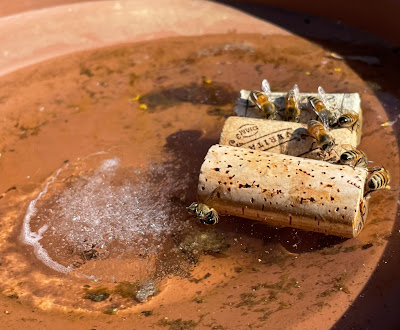
Even with the cork, there are bees who drown, but it at least provides a modicum of safety for those searching for water. The bees floating in the water are dead. But the ones on the back cork in the first photo look like they are winning the bee log-rolling contest. They are actually getting water between the two corks which don't move because the ice in the bird bath has glued them together.




Saturday, January 08, 2022

Water for bees all year - even in the winter

 There are a lot of days in the south and all across the country, when, even though it's winter, the temperature is warm enough for bees to fly. And when it's warm enough, they will fly.

Our bees in Georgia have year round pollen sources so when it's warm enough to fly, the bees will be out, looking for camellia or whatever might be a winter-blooming plant. Every day that my bees fly, I see them flying into the hives with pollen on their legs.

The other thing they are looking for is water. This year I'm in a new house (old, but new to me!) and have set up bird feeders. I also put a bird bath on my deck railing. I see birds in it on every sunny day. Because I know that bees can't swim, I have floated two corks in the bird bath to give the bees a landing place. I'll add a few more as a few more bottles of wine are opened.

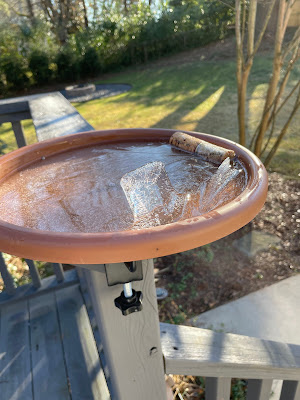
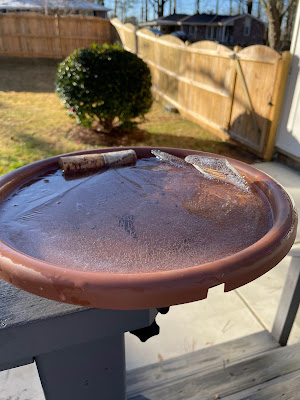
The other night on January 4, our temperatures dropped to the 20s and in the morning, my bird bath looked like Lake Michigan in the winter:


I guess in the night the wind whipped up the water and it froze in place!


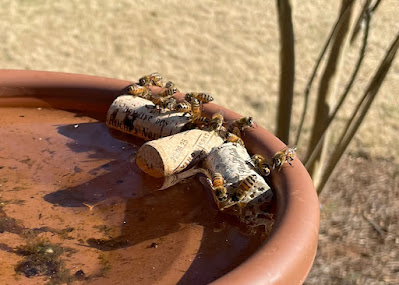
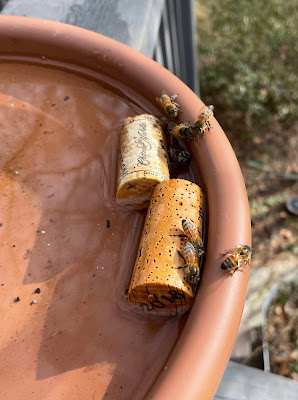
By Thursday, the 6th, it was warm again, and the bees discovered my water source. More accurately, probably one bee discovered my water source and went home and told her sisters to come too. You can see them below, balancing on the corks and the edge of the bird bath as they suck up water.


It froze again last night and by mid morning, it was 42F. I was taught that bees can't fly when it's lower than 50 degrees but these bees didn't get the memo, or someone didn't tell them that at 42F, they are not supposed to be out and flying. My bees were flying and were visiting my still thawing bird bath! 


So provide your bees with a water source. And most importantly, give them something to stand on so that they can get water without drowning.


Pin this post

LinkWithin

Related Posts Plugin for WordPress, Blogger...