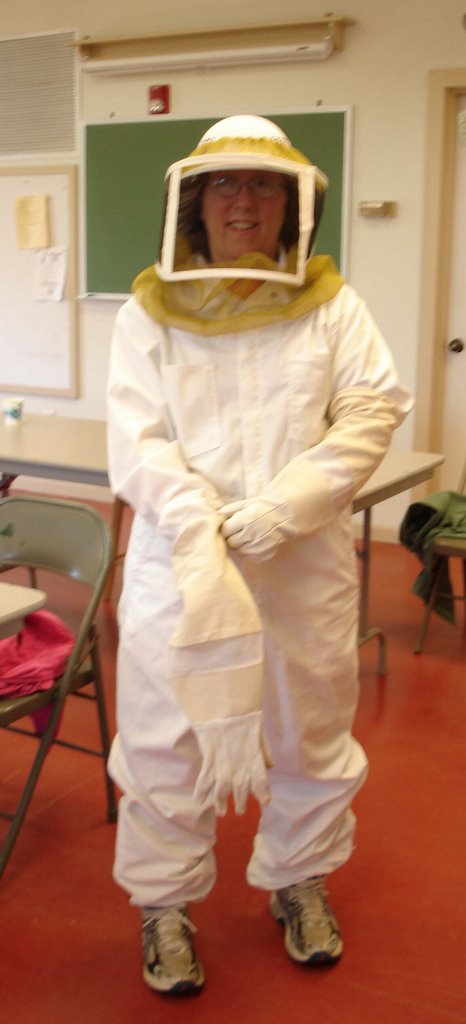
Welcome - Explore my Blog

I've been keeping this blog for all of my beekeeping years and I am beginning my 19th year of beekeeping in April 2024. Now there are more than 1300 posts on this blog. Please use the search bar below to search the blog for other posts on a subject in which you are interested. You can also click on the "label" at the end of a post and all posts with that label will show up. At the very bottom of this page is a list of all the labels I've used.

Even if you find one post on the subject, I've posted a lot on basic beekeeping skills like installing bees, harvesting honey, inspecting the hive, etc. so be sure to search for more once you've found a topic of interest to you. And watch the useful videos and slide shows on the sidebar. All of them have captions. Please share posts of interest via Facebook, Pinterest, etc.

I began this blog to chronicle my beekeeping experiences. I have read lots of beekeeping books, but nothing takes the place of either hands-on experience with an experienced beekeeper or good pictures of the process. I want people to have a clearer picture of what to expect in their beekeeping so I post pictures and write about my beekeeping saga here.Master Beekeeper Enjoy with me as I learn and grow as a beekeeper.

Need help with an Atlanta area swarm? Visit Found a Swarm? Call a Beekeeper. ‪(404) 482-1848‬

Want to Pin this post?

Friday, May 12, 2006

Super Frames with too much space

I wish the smell of honeycomb could be transmitted through the Internet. The room where I've been working smells so full of honey.

I expect that making mistakes is part of being a "newbee" and I am certainly making plenty. This mistake is that I ordered the wrong size foundation for my frames. The foundation is supposed to sit in a slot at the bottom of this kind of frame but I ordered 4 3/8" foundation and needed a larger size. So the foundation is hanging by the top wedge and not connected to the bottom.
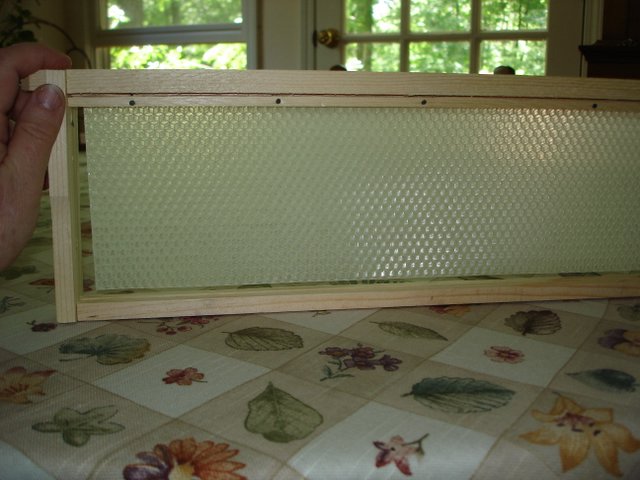
The bees should be fine with this - they'll make their own comb to fill the space. I'm planning to crush and strain the comb if I get any honey rather than using an extractor, so all of this should be fine, but I've been worrying about it - especially since I bought enough of this wrong size to fill five more supers - ARGHHHHHH!!


The amount of space between the bottom of the foundation and the bottom of the frame is only about 1/4" and if it hangs OK in the center of the frame, it ought not to bother the bees too much. Posted by Picasa

building supers

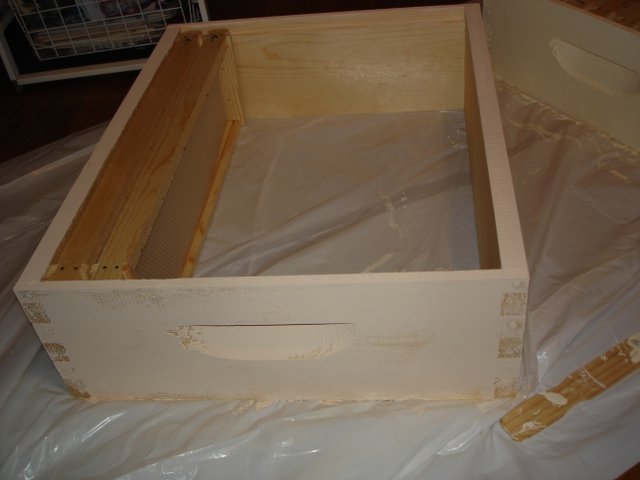
The honey super is a big empty wooden box built to bee specifications, allowing for what is known as bee space.

First you build the super - it's the empty box below.

Then the supers are painted to help them weather the outdoors in which they stay. I'm painting the one on the left Peach Beige (after all, I'm in Georgia) and the one on the right Golden Blonde. When I had my sunporch redone, I went through eight quarts of paint to find the perfect color, so I'm using the leftovers to paint my hives.


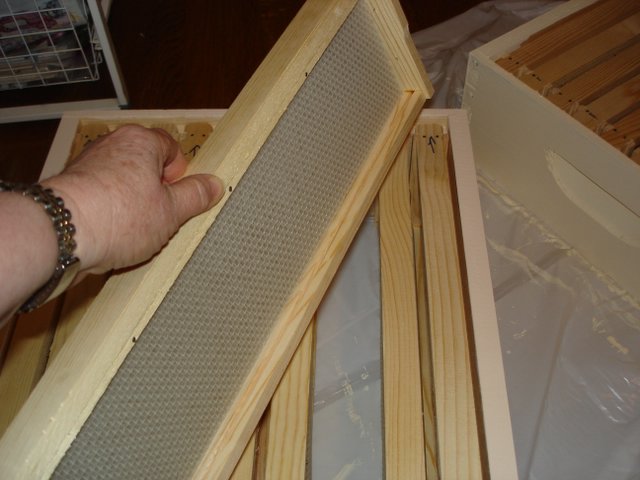
Here's a super into which I've begun putting "frames" for honey storage. The frames are made of wood with a thin piece of honey comb nailed into them for the bees to have a foundation to use to get started building their own honey comb.


Here the last frame is being installed into the super for Bermuda (the peach beige one). You can see the tiny nails that hold the honeycomb foundation to the top of the frame

Posted by Picasa

Tuesday, May 09, 2006

Bee Status Report


I donned my beesuit and lit the smoker! I used dryer lint to get it started and pine needles to keep it going - Hooray!

I checked on both hives and they look great. Bermuda has gotten a new shot of adrenalin and is growing rapidly - still a couple of frames behind Destin. Both are working well in the medium that I added last week.

These two layers - the hive body and the medium super are for the bees. This weekend or even maybe on Friday I'll add a honey super that may actually be for me.

I went to the Metro Beekeepers
meeting tonight. In Atlanta we have one of the oldest ongoing beekeepers' associations in the country. It's a great place to get help with beginner questions. Cindy Bee (that's really her name) who is famous in Atlanta for rescuing swarms of bees was there. She knows so much about it. I loved hearing her talk about her bees.

I'm learning more every day and from every contact with other beekeepers.

Maypole and Morris dancers at the Folk School


While we were there, since it was the first weekend in May, they had a Maypole and a demo by Morris dancers . We took a break from candle making and honey extracting and watched them.

The Morris dancers were male and female and had blue face make-up. They dance with broomstick-like sticks which are clanked together with the stick of another dancer. They were accompanied by a funny group of instrumentalists playing a recorder, a bent tuba, and a drum decorated with a red feather boa!


Posted by Picasa

Monday, May 08, 2006

Final display at the Folk School

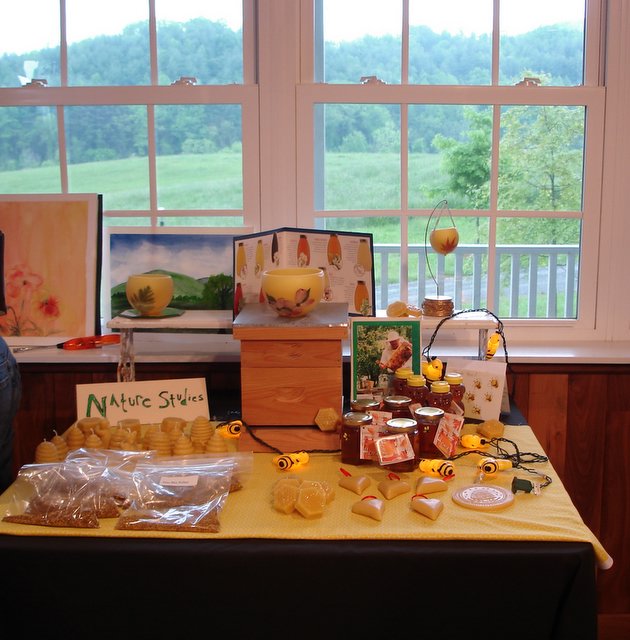
At the end of the weekend we had visited beehives both at the Folk School and at one of our teacher's nearby bee yards. We had taken apart hives, cleaned equipment, extracted honey and made candles and other items from beeswax.

On the table you can see the candles we made, the bags of pollen we collected, the honey we extracted. We also made some beeswax ornaments and a couple of wax bowls. Mine is the large one on on top of the miniature hive.

The honey extraction was quite an adventure. First we used a hot knife to cut the capping off of the honey. We put the frames of honey two at a time in the extractor and spun it around and around, slinging honey out of the frames via centrifugal force. Then we filtered the honey through two fine mesh filters into a plastic container with a spigot on it. Finally we filled the honey jars.

Kelly, another class member, and I then squeezed the cappings in our hands to extract the last of the honey - that was a messy job, but when we were finished, we got to taste the honey on our fingers!

On Sunday morning the people staying at the Folk School all had French toast with our extracted honey for their breakfast! Posted by Picasa

How to light a smoker and other things I learned at the Folk School

I learned many things at the Folk School workshop.

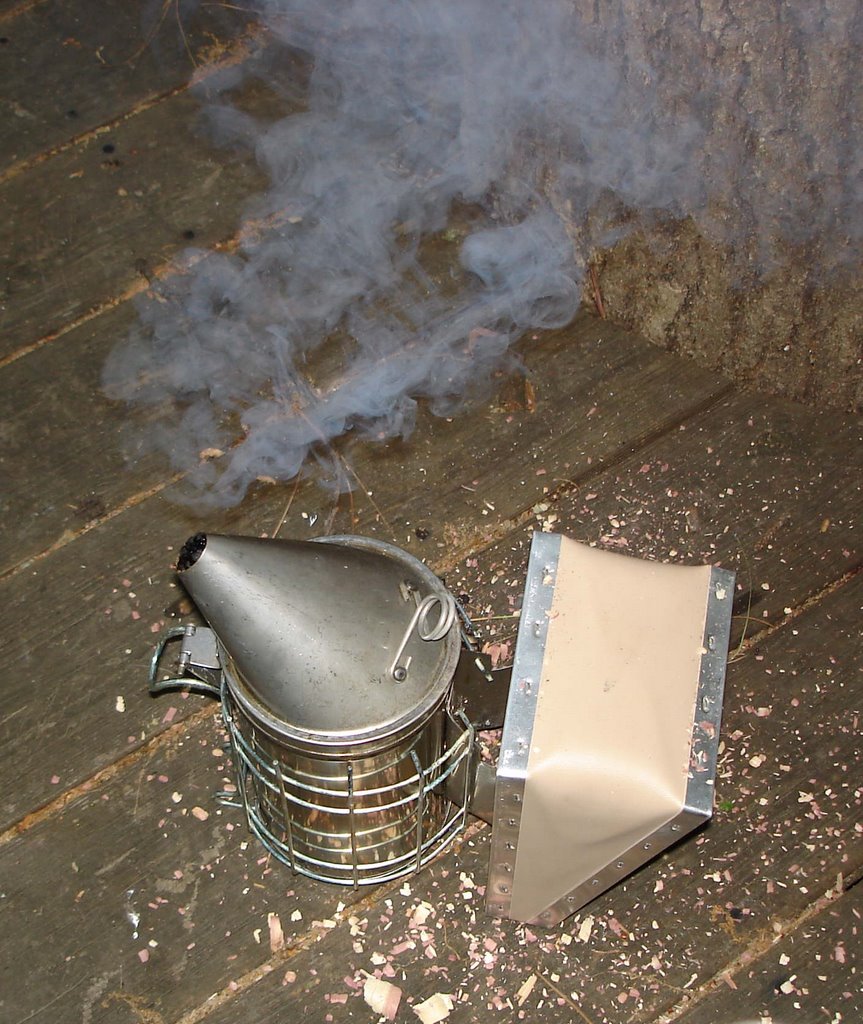
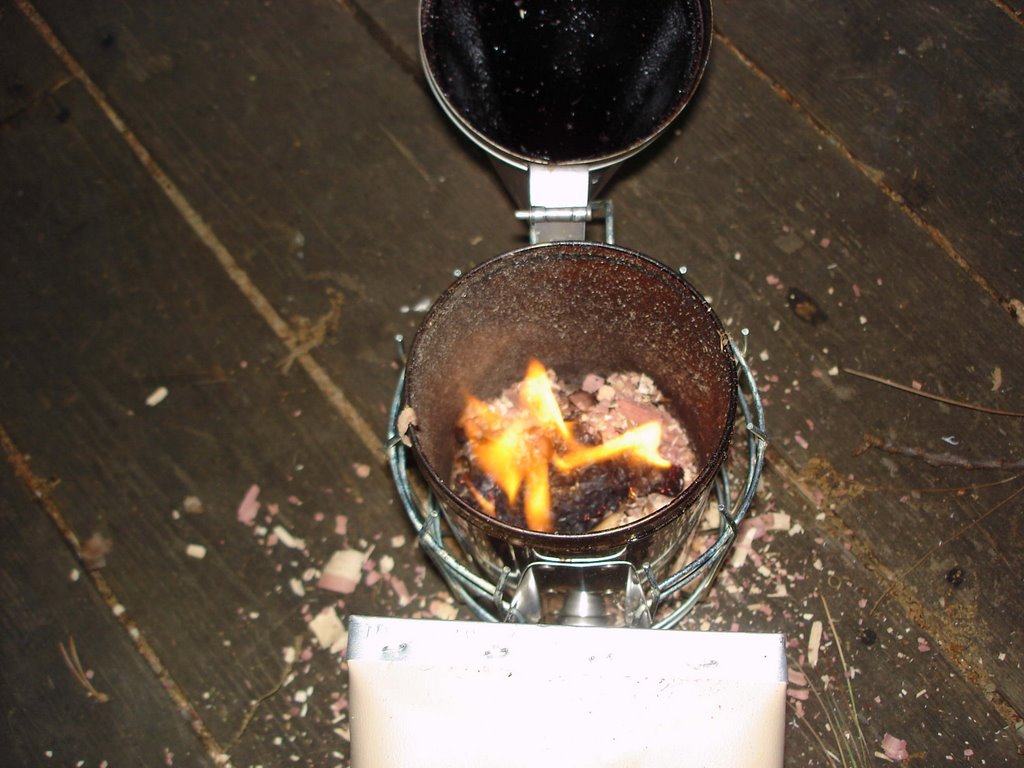
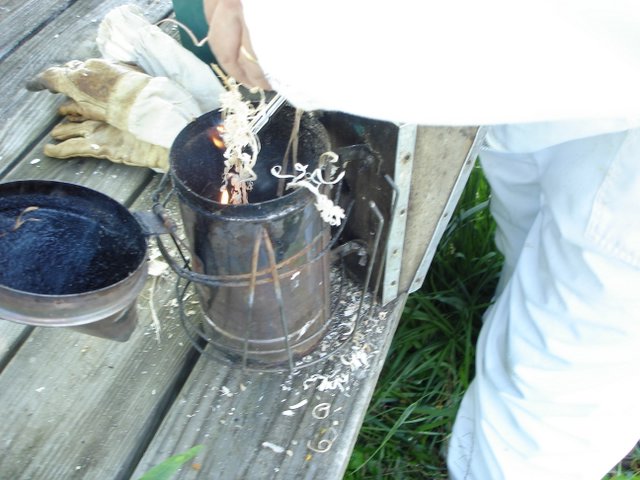
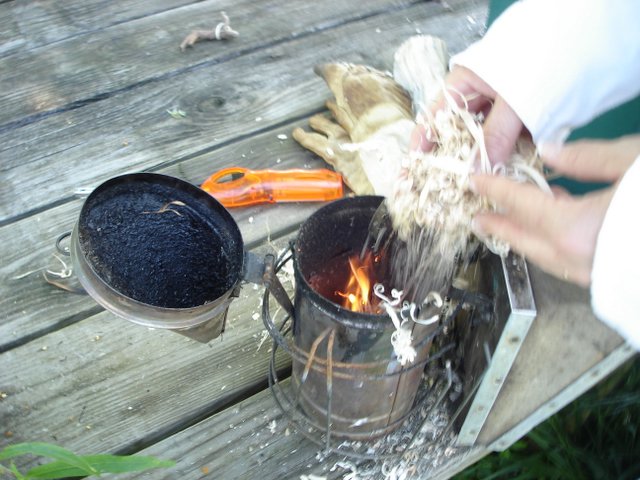
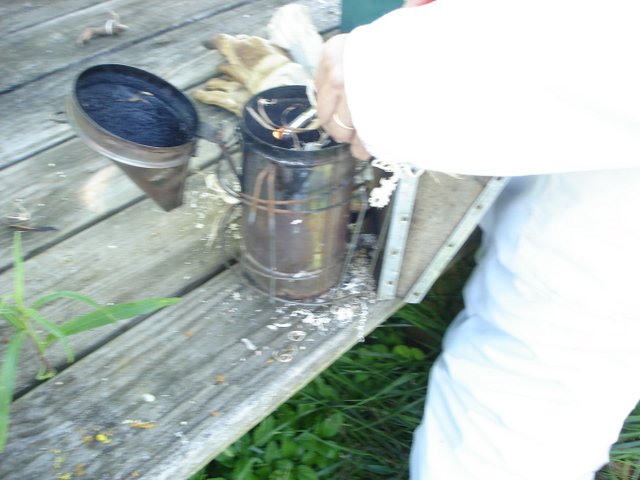
1. How to light a smoker

Virginia used wood shavings. She lit a few at the bottom of the smoker and then built the fire up from there. I am lousy at lighting the smoker, but I think I have been packing it too full before starting it. She dumps it all out when she's through and starts over each time. I have left the unburned fuel in mine after using and just stopped it up to end the fire.


These are a little out of focus because I was taking them while wearing my bee suit and veil and it was awkward to take pictures.


2. How to use a honey extractor.

We took the extractor apart to clean it and then didn't know how to get it together. It took five of us working together before Charles, a class member, finally got it right! That's probably the beginning of a good beekeeper joke - how many beekeepers does it take to put together an extractor? (someone will have to supply the funny answer) For us, it would be one: Charles, but it took five of us klutzing around before we found the answer.


3. How to melt and use beeswax.

Virginia's secret was to pour the wax through the control top part of (unused of course) control top panty hose to filter out any extra stuff from the comb and frames that might accidentally be in the wax. She poured into a 1 liter plastic bottle which is just the right thickness to handle the heat of the hot wax.

4. How to use the hive tool.

I've been using the curved end. Virginia almost exclusively uses the straight end and this allows less of what I end up doing - breaking into comb and causing drips of honey and damage to the comb. Posted by Picasa

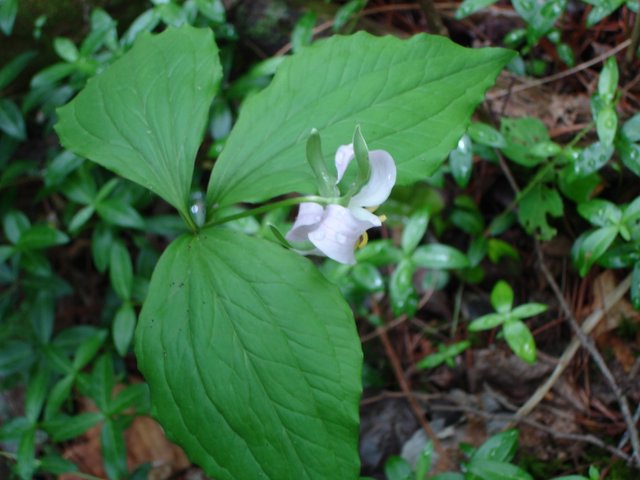
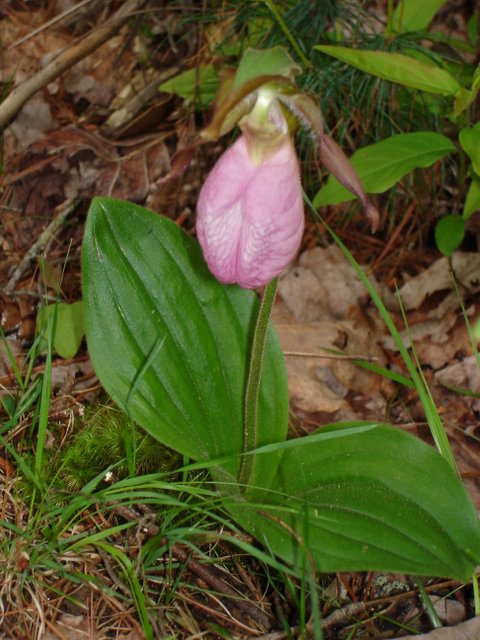
Flowers, not bees!

I hiked a trail at Black Rock Mountain State Park
during my Folk School weekend and saw
foam flower (picture one),

Catesby's Trillium (picture two)


and joy, joy, joy, the pink ladies' slipper (picture three) Posted by Picasa

Winnowing the Pollen

We winnowed the pollen by pouring it from the metal bowl into the pan below.

The fan is on and blows all the stuff that shouldn't be in the pollen onto the white butcher paper. We could see pieces of bees legs and dust and other lovely stuff on the white paper when we had finished.

The bowl of pollen was poured and re-poured four different times in front of the fan before we were finished. Each class member took home a sandwich bag of pollen.

Hmmmmm, now what will I do with that? Many people eat pollen as a health food..... Posted by Picasa

Pin this post

LinkWithin

Related Posts Plugin for WordPress, Blogger...