Welcome - Explore my Blog

I've been keeping this blog for all of my beekeeping years and I am beginning my 19th year of beekeeping in April 2024. Now there are more than 1300 posts on this blog. Please use the search bar below to search the blog for other posts on a subject in which you are interested. You can also click on the "label" at the end of a post and all posts with that label will show up. At the very bottom of this page is a list of all the labels I've used.

Even if you find one post on the subject, I've posted a lot on basic beekeeping skills like installing bees, harvesting honey, inspecting the hive, etc. so be sure to search for more once you've found a topic of interest to you. And watch the useful videos and slide shows on the sidebar. All of them have captions. Please share posts of interest via Facebook, Pinterest, etc.

I began this blog to chronicle my beekeeping experiences. I have read lots of beekeeping books, but nothing takes the place of either hands-on experience with an experienced beekeeper or good pictures of the process. I want people to have a clearer picture of what to expect in their beekeeping so I post pictures and write about my beekeeping saga here.Master Beekeeper Enjoy with me as I learn and grow as a beekeeper.

Need help with an Atlanta area swarm? Visit Found a Swarm? Call a Beekeeper. ‪(404) 482-1848‬

Want to Pin this post?

Sunday, December 10, 2006

In the Bleak MidWinter

Yesterday when I woke up it was 17 degrees in Atlanta. This morning it was 19 degrees. By afternoon it was up to the upper 50s.
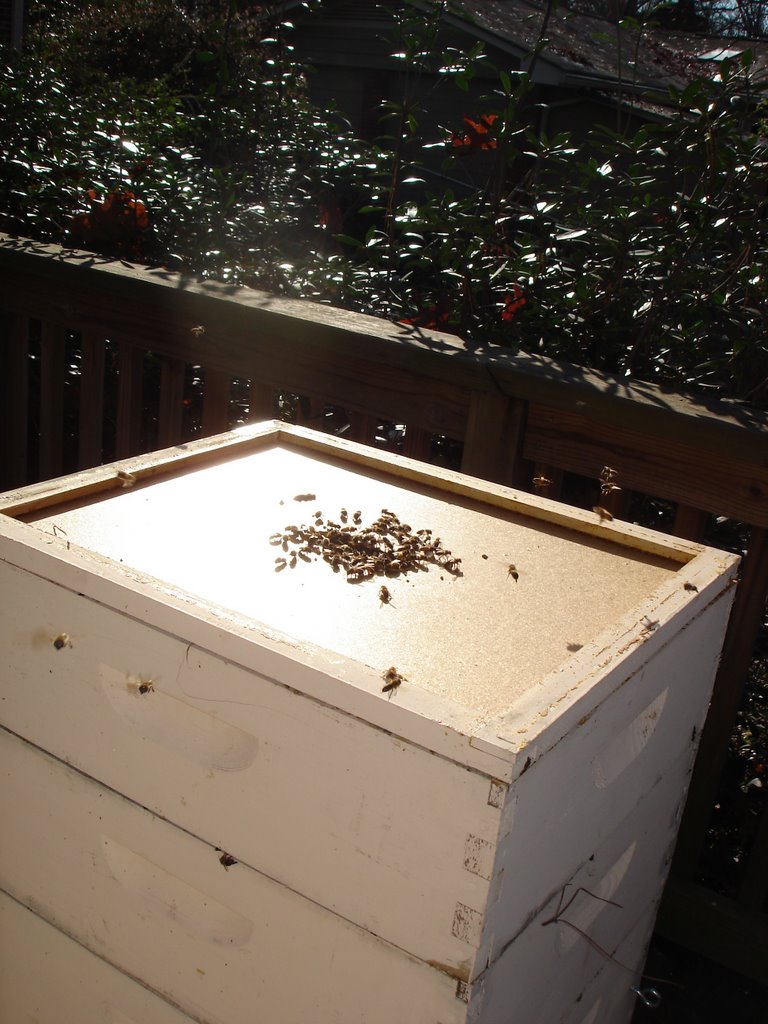
When the bees die in the summer, their bodies are removed by the mortician bees. In the winter cluster, the bees have to wait for warmer temps to move the bodies out of the hives.

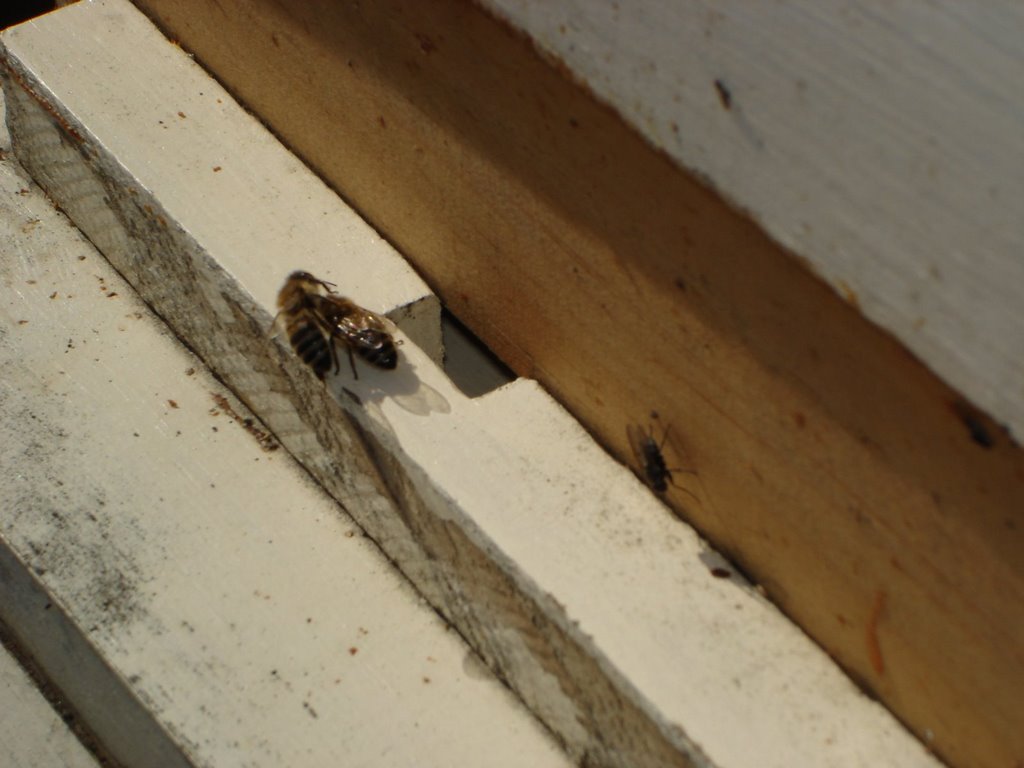
Also in the winter, some of the older bees may fly out on the warmer temp times and then be too weak to return to the hive. These bees will add to the dead bees in front of the hive. The bee in the upper left of the bottom picture is barely able to move and will die out on the deck without returning to the hive.

Bees in winter - sort of bleak, huh? Posted by Picasa

Wednesday, December 06, 2006

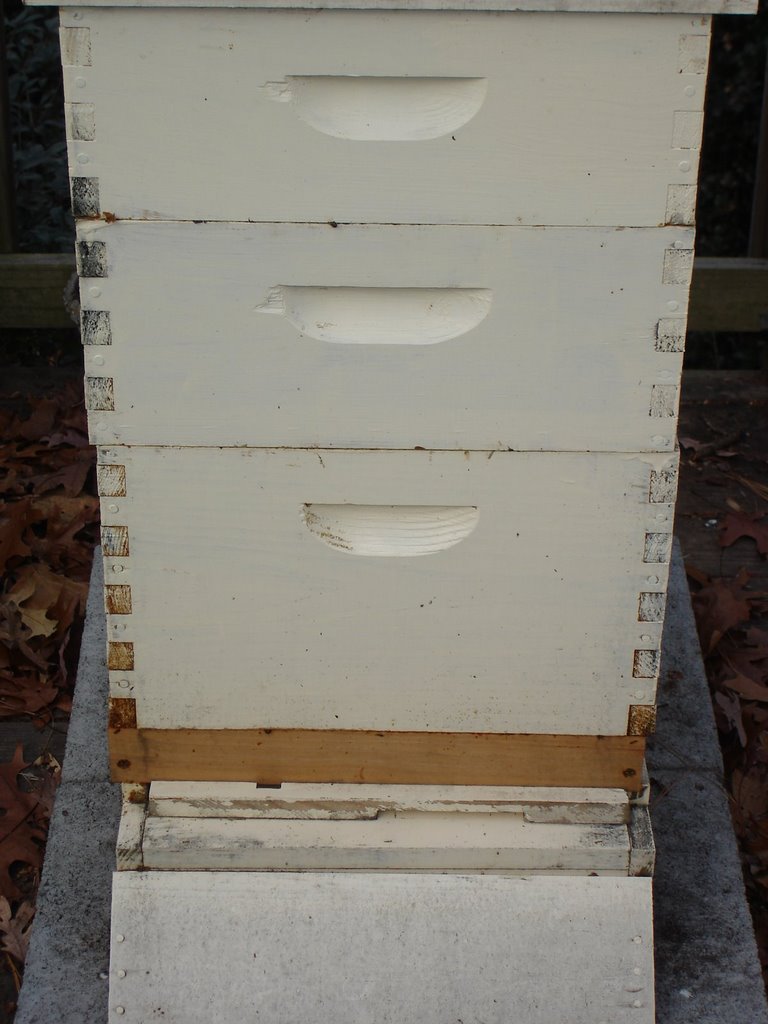
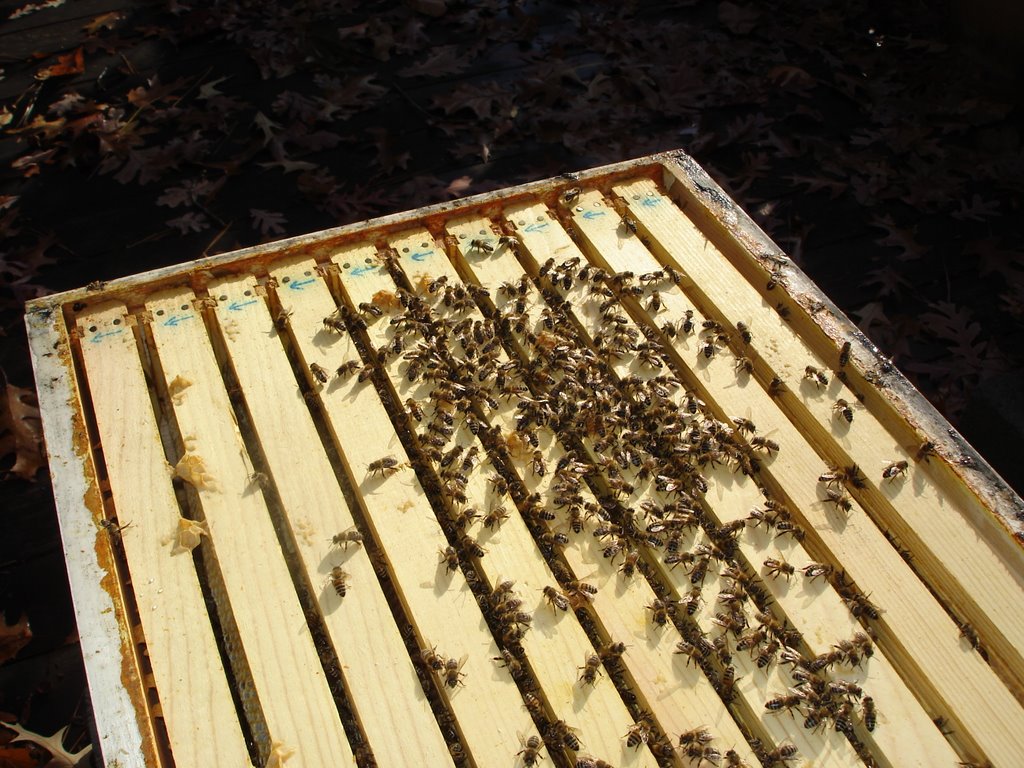
It's cold in Atlanta - are the bees warm? Only they know but supposedly they are clustered in a ball shaped group in the center of the brood box and are maintaining the cluster temperature at around 45 degrees at the outer edges and warmer in the center.
The bees are not keeping the entire hive warm, just their cluster. Occasionally when the days get above 55 I see them flying out of the hive.
The entrance reducer allows them to enter and leave through this small entrance. Here two bees are stepping all over each other as they leave. Posted by Picasa

Friday, December 01, 2006

Winter hives and Linda's Bees

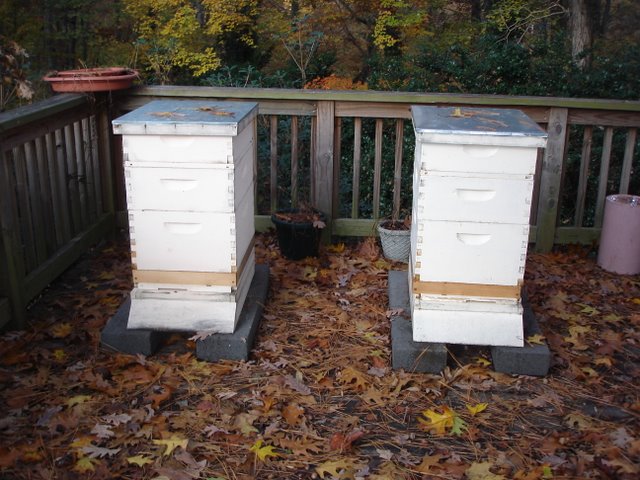
Linda's beehives in the late fall/early winter (it's Dec 1, 2006)


We've had warmer days so I wanted to go into the hives before the cold weather moves in tonight. It's about 60 degrees this morning, so I decided to inspect the hives. Destin had a lot of bees on top of the extra super that is above the inner cover. I looked through the super and found that the bees have moved more of the honey down into the hive (or consumed it). They seemed to be storing pollen there, which is also important for their lives. I wanted to move this extra super back below the inner cover.

I only saw one small hive beetle in Destin and there were no bodies in the vinegar trap, but I refilled the trap with new vinegar anyway and put the hive back together with the extra super below the inner cover.


In Bermuda the bees were busy and angry that I had opened their cover. I didn't use smoke today. When the bees are smoked, they engorge themselves with honey and it didn't make sense to me to encourage them to deplete their winter stores for my comfort. It wasn't too bad - they flew around my veil more than usual but didn't seem particularly attacking.


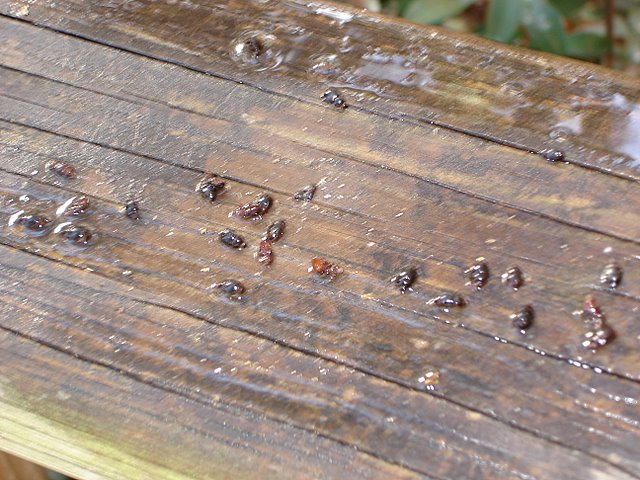
The vinegar trap in Bermuda contained about ten bodies. I poured them out on the deck rail - maybe birds will eat the bodies - and refilled the vinegar. I saw about 4 beetles in Bermuda that I squashed with my hive tool. I also saw about 2 on the inner cover. These are much lower numbers than before. Does the SHB hibernate for winter?


I inspected all the bees I saw to see if the Varroa mite had given them deformed wing virus, but I didn't see any unhealthy wings on any of the bees. So far, so good.

Wednesday, November 15, 2006

Small hive beetle making friends with the bees


I was looking through my library of pictures from the bee hives when I found this picture of the small hive beetle cozying up to a bee drinking honey. Amazing! This is a cropped close-up of a much larger view of a frame of honey at the end of the season.

The SHB looks kind of cute in this picture, but I squash them on the inner cover when I see them and celebrate when I find their drowned bodies in the apple cider vinegar in the Hood trap in my hives. Posted by Picasa

Tuesday, November 14, 2006

IPM and the Metro Atlanta Beekeepers Meeting

Tonight the Metro Atlanta Beekeepers' meeting centered on IPM (Integrated Pest Management). Jennifer Berry from the University of Georgia's entomology program talked to us about studies she is involved in about the varroa mite.

Although she did discuss some chemicals, I am not planning to use chemicals in my hive, so I won't report about that part of her talk. She did talk about research showing that the screened bottom board is essential to effective IPM. At UGA the screened bottom board stays open on the hive all winter long. She discussed three non-chemical ways to manage the varroa mite (all in conjunction with the screened bottom board):

1. Using hygenic stock such as the Minnesota Hygienic bee or the bees raised in N Georgia by the Purvis Brothers Apiary

2. Killing drone brood. The drones are in the capped state longer than house bees and so the varroa mite likes to lay her eggs in drone cells because the mite has a greater chance to grow up. So you put drone foundation in a frame in the hive and when the cells are capped, remove the frame and put it in the freezer. This kills the drone larvae (and thus the mite can't grow). Put the dead drone frame back in the hive and the bees clean it out and start again.

3. Doing the powdered sugar shake (as I did this year). Take a flour sifter (now why didn't I think of that?) and sift the powdered sugar over the brood box. Put a sticky board under the SBB to catch the varroa which fall as the bees groom each other and the mites fall off. Then you can count the fallen mites to get an idea of how many mites are in your hive. If you do a powdered sugar shake every 10 days for a month, you should significantly lower the mite count.

I asked her about small cell bees and she said that the UGA lab is just beginning a study on small cell. One major beekeeper, Bill Owens, in Georgia has all of his hives regressed to small cell and she talked about his successes. With 800 hives, he has only lost 3 hives this year and not to varroa.

On the other hand, she mentioned that while Dee Lusby is going around talking a lot about small cell, she didn't feel convinced because she noted that Dee lives in Arizona and all the bees there are African honeybees - which have a shorter developmental cycle anyway and are varroa resistant. Jennifer's point was that the bees that Lusby has regressed to small cell would be small and varroa resistant because of their genetic heritage (African) and that the cell size didn't make a difference. She also talked about how long it takes to regress bees and how hard it is.

Jennifer is sampling honeycomb which Cindy Bee finds in her bee removal business. So far the "wild" comb is about 5 mm and doesn't support the theory that bees in the wild naturally build 4.9 mm comb. If you'll scroll down this link, you'll find a short write-up about both Cindy Bee and Jennifer Berry.

In spite of all of this, I am ordering small cell foundation this winter to begin regressing in the spring.

Sunday, November 12, 2006

Unwelcome guest


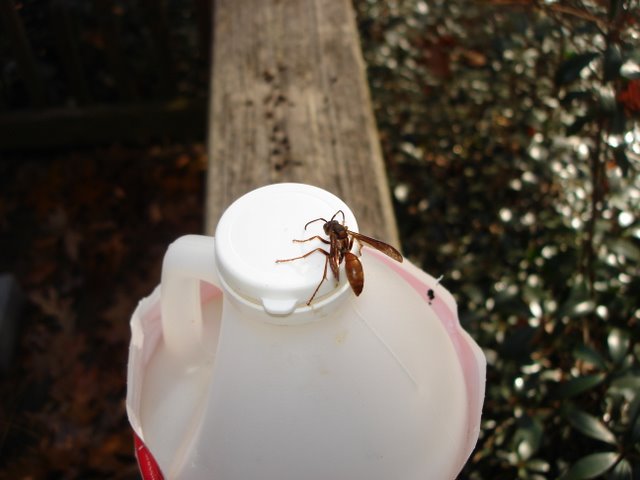
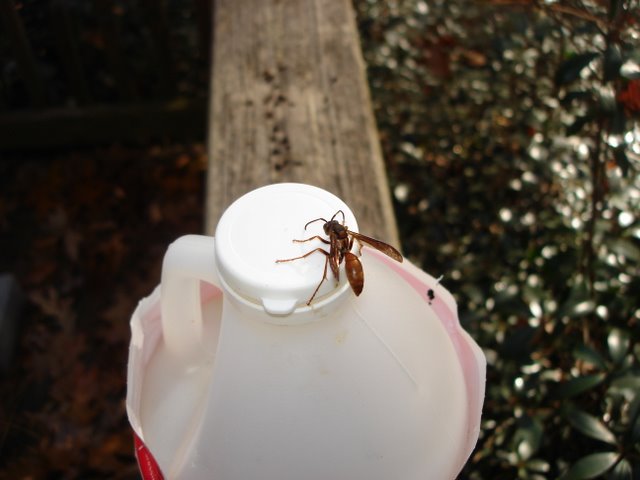
After working the hives on Friday, I turned to gather my things to go back inside and discovered a visitor to my apple cider vinegar bottle. This wasp did not care if I smoked him/her (I tried to no avail) and generally looked menacing.

I left the vinegar jug outside overnight to allow the wasp to leave in his/her own good time.

By the way, most of the time now the hives look like the last picture. The bees are clustered in the center of the hive body to keep each other warm when the temperature is low and they are nowhere to be seen.

I miss them.
Posted by Picasa

News about the shallow above the inner cover


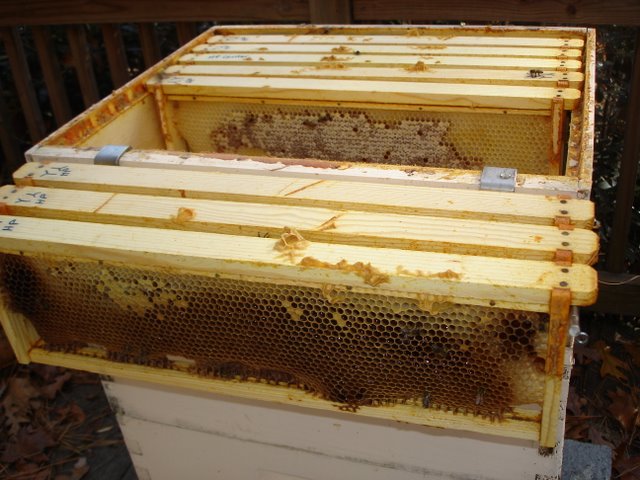
Well, it's hard to explain what is going on. In the Destin hive, the middle hive body feels heavy and full of honey. They had moved some of the honey out of the super above the inner cover into the medium below. (It was 79 degrees in Atlanta on Friday so I felt safe to open the hives).

As you can see they stored pollen in one of the frames. In one frame it looked as if they were raising brood (above the inner cover???).

In Bermuda, they had moved very little honey into the lower hive bodies and the medium hive body on Bermuda felt lighter than the one on Destin. The last two pictures are from Bermuda where they appeared to have capped some of the honey but have not moved much if any.

I left both supers above the inner cover. I'll consult with the beekeepers at the Metro Beekeepers meeting on Tuesday and see what they advise. I believe anyone would say that it's a relative decision. If the bees appear to need the honey, then leave it there. If not, take the super off.

I plan to leave the supers above the inner cover a little longer. In Atlanta we have days with temps above 65 interspersed throughout the early winter, so I'll get to go back in the hives again, probably after Thanksgiving.

Hope everyone has a good Thanksgiving. I'll not be posting to the blog again until after Thanksgiving unless some exciting bee news comes my way while eating turkey!

Posted by Picasa

Saturday, November 11, 2006

Dead Small Hive Beetle - Drowned in Vinegar


It was 79 degrees in Atlanta today so I could go into my hives to see how things are with the bees. I emptied both small hive beetle traps and replaced the vinegar with fresh. Here are the drowning victims from the Destin hive.

I saw these dead guys but only two SHBs running around on the inner cover. In Bermuda there were only five SHBs in the vinegar trap and two of them were swimming around. I smashed them with my hive tool after dumping them out of the trap and refreshed the vinegar there too.

It was exciting to see such a lowered number of SHBs. Maybe they were hiding in the lower hive body, but I usually see 30 or so in each hive on the inner cover. Maybe they don't like vinegar and don't like the colder weather.

When I closed up the hives and turned around to gather up my stuff, there was this lovely wasp on my vinegar bottle. I smoked him/her, but the wasp stayed right on the top of the bottle. Needless to say, I left the bottle on the deck and will get it tomorrow when hopefully the visitor will not be there!
Posted by Picasa

Pin this post

LinkWithin

Related Posts Plugin for WordPress, Blogger...