Welcome - Explore my Blog

I've been keeping this blog for all of my beekeeping years and I am beginning my 19th year of beekeeping in April 2024. Now there are more than 1300 posts on this blog. Please use the search bar below to search the blog for other posts on a subject in which you are interested. You can also click on the "label" at the end of a post and all posts with that label will show up. At the very bottom of this page is a list of all the labels I've used.

Even if you find one post on the subject, I've posted a lot on basic beekeeping skills like installing bees, harvesting honey, inspecting the hive, etc. so be sure to search for more once you've found a topic of interest to you. And watch the useful videos and slide shows on the sidebar. All of them have captions. Please share posts of interest via Facebook, Pinterest, etc.

I began this blog to chronicle my beekeeping experiences. I have read lots of beekeeping books, but nothing takes the place of either hands-on experience with an experienced beekeeper or good pictures of the process. I want people to have a clearer picture of what to expect in their beekeeping so I post pictures and write about my beekeeping saga here.Master Beekeeper Enjoy with me as I learn and grow as a beekeeper.

Need help with an Atlanta area swarm? Visit Found a Swarm? Call a Beekeeper. ‪(404) 482-1848‬

Want to Pin this post?

Sunday, May 21, 2006

Inside the hive brood cells


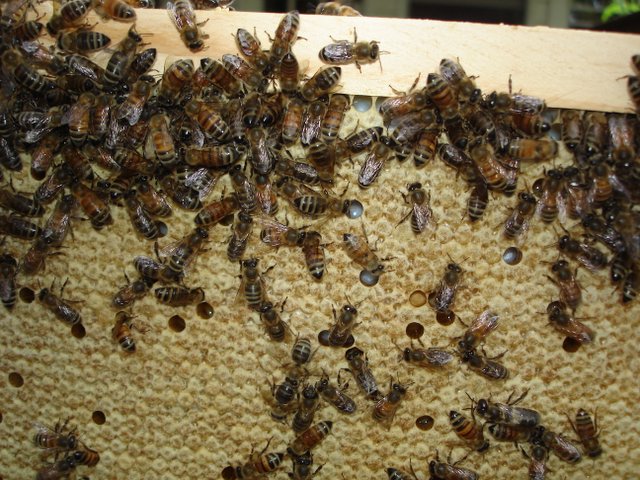
Here you can see what it looks like on a brood frame. If you double click on a picture you can see it much larger.

You can see the white larvae glistening in their cells.

The capped cells are developing into mature bees.

In the center of the lower picture you can see a bee emerging to take her place in the hive.

If you look closely you'll see some workers with their heads down in the cells Posted by Picasa

Bees fill in foundation just as predicted

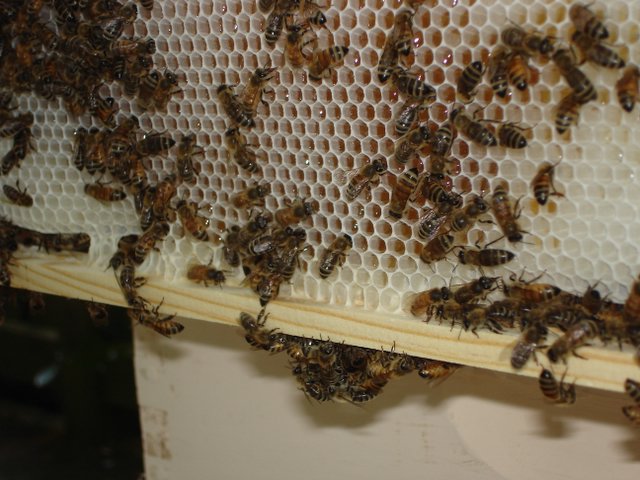
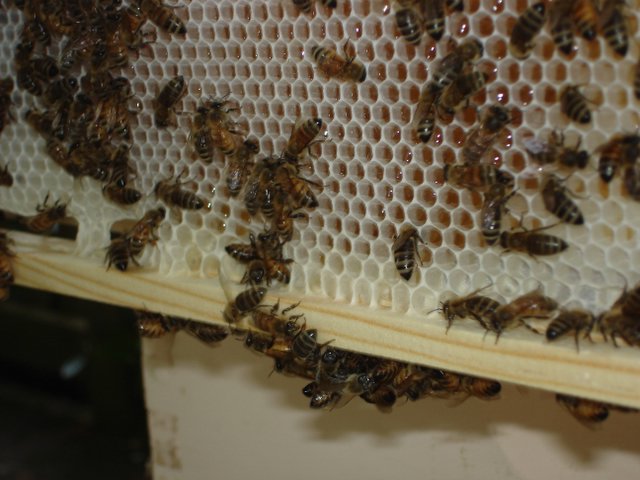
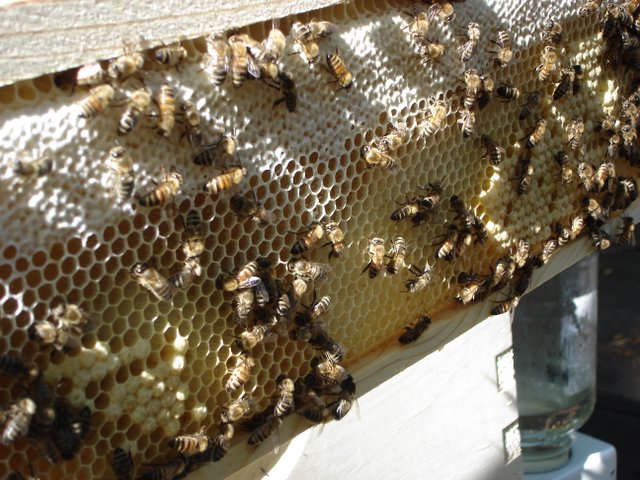
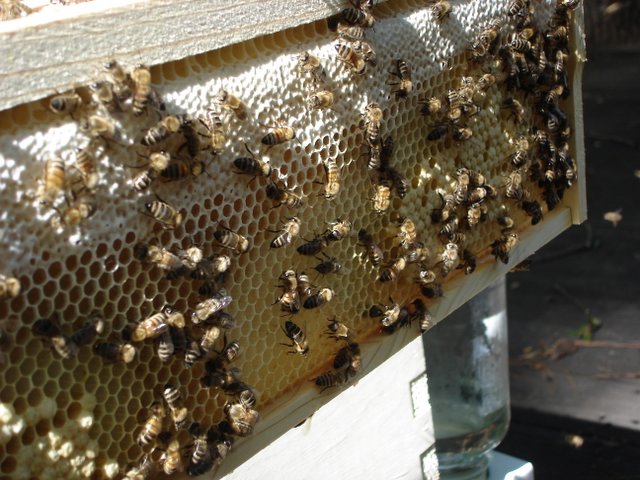
Just as the experts on Beemaster predicted, the bees in Bermuda have filled in the gaps on the honey super and extended the wax to meet the frame. As you can see in these pictures, they are filling in the comb with honey and are making the wax to bridge the gap.

In one foundation frame, the foundation had come loose from the top of the frame and the bees had attached it to the comb of the next frame. I just picked those two frames up together. If they did that with all the frames, I'd have a real mess on my hands, but I think so far that's the only one.

My busier hive, Destin, had not even touched the honey super and had not dealt with the short foundation yet. However, they will be there soon. The medium super was extremely heavy with brood and honey, so there's nowhere for them to go but up to the honey super.

Posted by Picasa

Saturday, May 20, 2006

It's Saturday night and the bees are bearding!


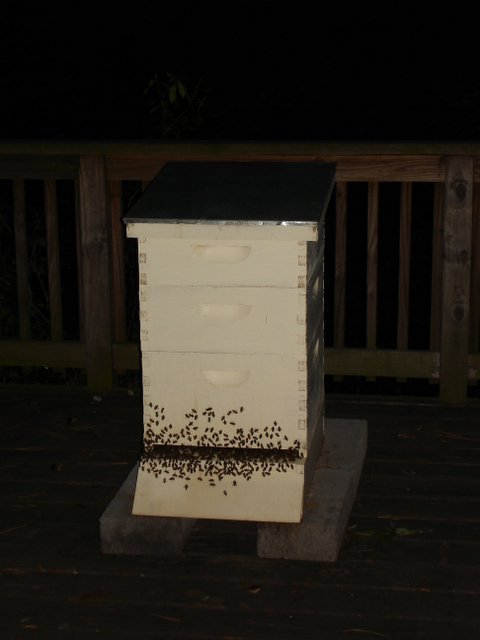
I just drove in from the mountains of North Georgia to find the bees at Destin bearding across the front of the hive. The day here in Atlanta has apparently been hot and dry. Although the picture shows bees standing still, in fact they are each moving and dancing and having a real good time!


Here they are up close and personal.


What more can you expect from bees on a Saturday night?Posted by Picasa

Thursday, May 18, 2006

Bees and the Beehives after the rain

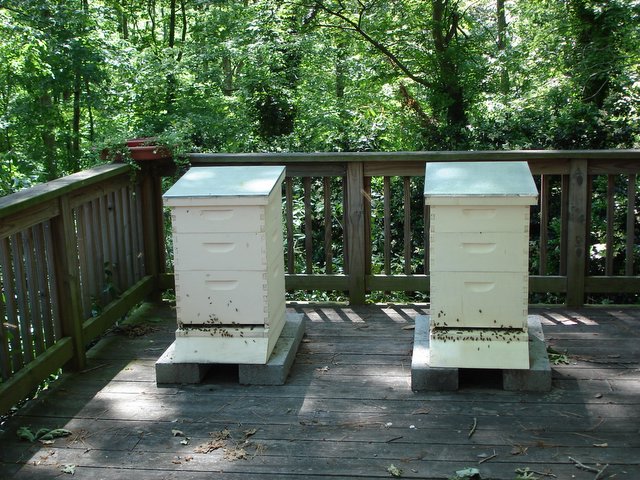
Here are the beehives in the early morning sun after a night of rain.


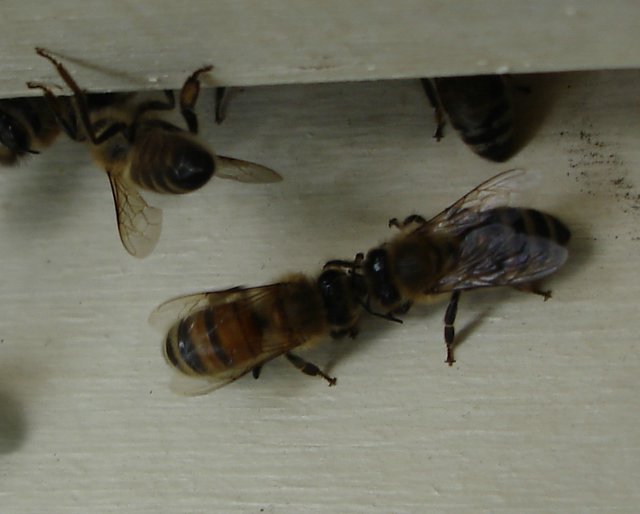
The two bees in the first picture are bumping heads - hmmmmm. Is it a kiss? Surely not. Are they talking to each other about the weather? Is this the bee way of saying, "Have a good day?"
Here are the bees venturing out of the hive. They have some water to navigate on their way out to forage. Posted by Picasa

Do the bees recognize the beekeeper?

Well, I'd like to think I'm developing a relationship with my bees. I go out and stand or sit between the hives and watch them come and go. But I never approach the hives from the front so that I don't interrupt their flight paths. So far since I installed the hives on April 16, I haven't been stung.

There's a thread going on the beemaster.com forum about this topic, and I was disappointed to read that it's highly likely that the only reason the bees aren't bothering me is that I am not bothering them - not that they are recognizing me. Here's the thread
if you'd like to read it:


Since bees turn over about every 40 days in the hive, the queen is the only bee in the hive who lives sometimes 3 or 4 years. Gives new meaning to the phrase: "Long live the queen!"

Sunday, May 14, 2006

Bee Housekeeping

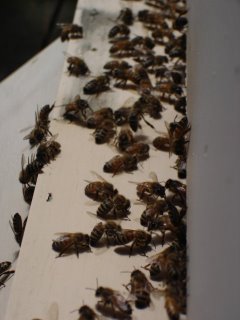
This morning I watched from my sunporch something that looked like two bees fighting. I went outside to find a bee struggling to pull another bee out of the hive. She would pull and the bee would disappear back into the hive.

On her fourth try, she pulled the bee out of the hive and flew off carrying her. The bee she was carrying was dead and it was her job to carry out the body. She flew about five feet and left the body on the deck.

She was a mortician bee, I guess.

The bees have a specific job progression from birth. At first they remain in the hive to clean up, groom the queen, take care of larvae, make wax and honey.

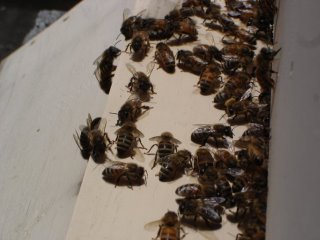
Then they hang out at the entry to the hive, fanning the entry way either to cool the hive or to help solidify wax cappings over the brood or the honey.

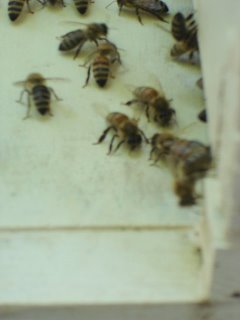
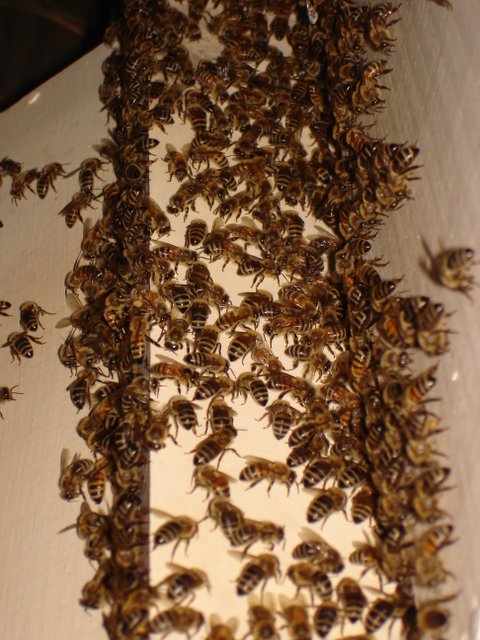
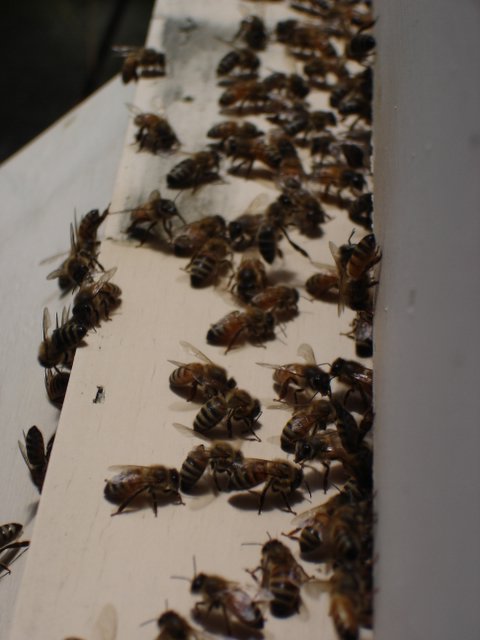
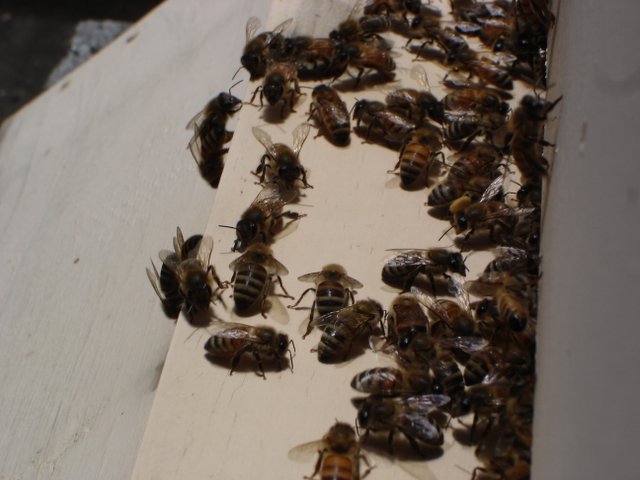
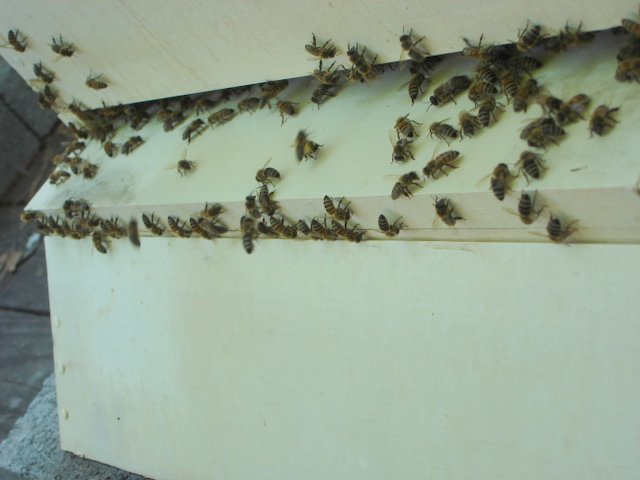
These pictures are of bees hanging out at the hive. I think the Conga line of bees at the entry to Destin in the third picture is rather funny.

The last job in a bee's life is the work of foraging. Many of the bees in these pictures are at that stage. They communicate to each other where to find the nectar and pollen and then they fly off. They've developed the strength for this during the time that they were fanning at the entry to the hive. These foragers in the summer live about three weeks before they die and get carried out by a mortician bee.

As Winnie the Pooh said, "You never can tell with bees."

Posted by Picasa

Added super to Bermuda

This afternoon I added the super to Bermuda (the pinkish hive on the left). I am pleased because I did it without using my smoker and only wore my regular clothes with a bee veil and my gloves.
Posted by Picasa

Friday, May 12, 2006

Honey in the beehive

I checked the hives before adding the super today. I found bees working hard to make and cap honey in the middle super of both Bermuda and Destin. Destin was fully drawn out (meaning that the bees took the wax foundation that I put in the frame and added wax to it to expand the depth of the comb) with honey in every frame except two and those were drawn out with wax, so I added a honey super to it.

The white capped wax at the top of the frame is over honey-filled cells. Some of the darker cells just below that are filled with pollen. The beige cells in the center and bottom are brood cells in which baby bees are being raised.

Bermuda continues to be slower and maybe not as strong. They had only worked on 6 of the 10 frames in their medium super, so I am waiting until about Monday to give them another super.

I also took away the sugar water feeders on both hives. Posted by Picasa

Pin this post

LinkWithin

Related Posts Plugin for WordPress, Blogger...